Where to actually buy good food in the UK, and how to know it is any good
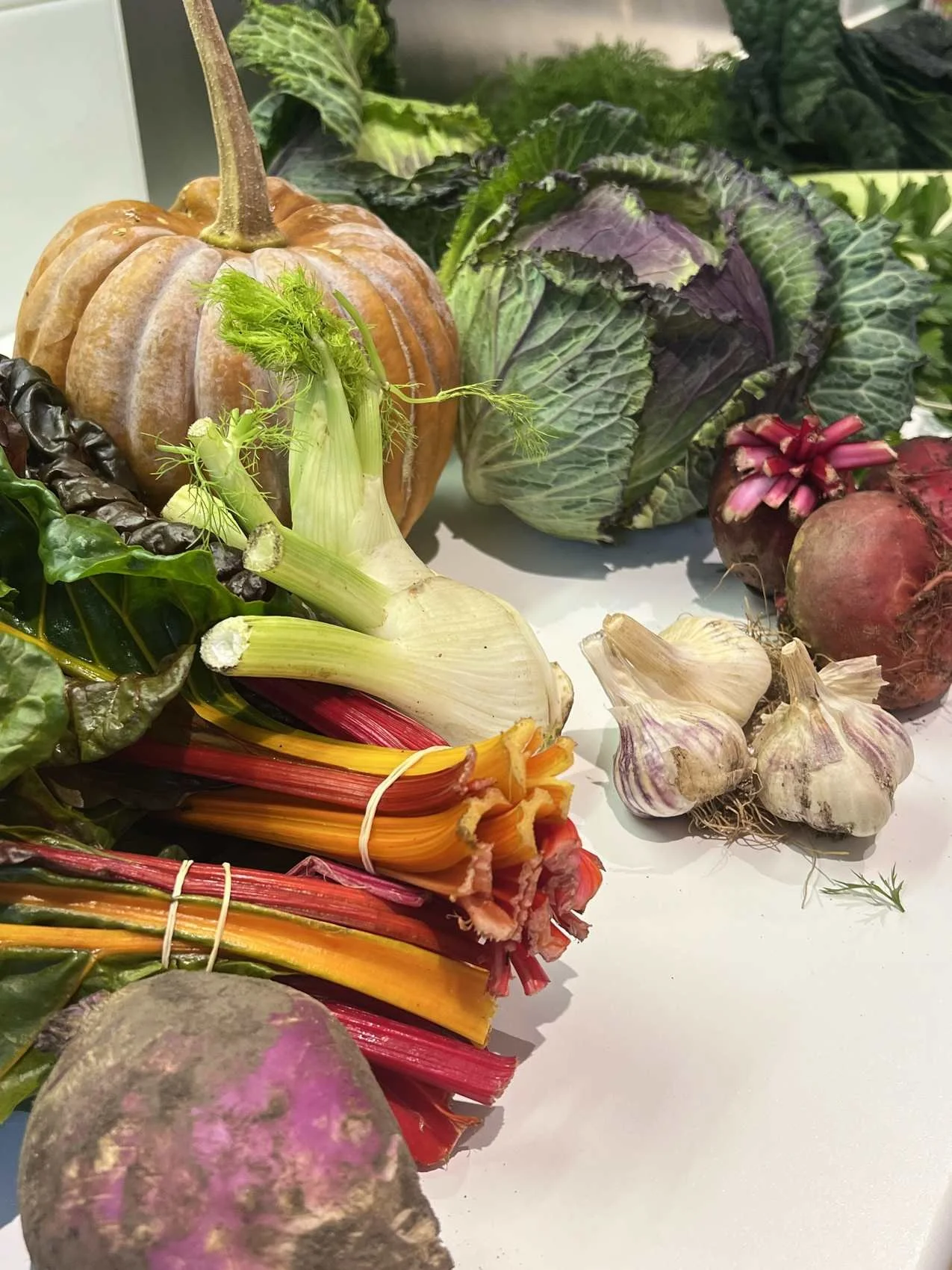
A week's veg, bought direct.
Good food in the UK is easier to find than it used to be, and harder to judge than it looks. The best places to start are a proper butcher, a good farm shop, your local market, and buying direct from farms and producers. But none of those is automatically good, and that is the part most advice skips. So here is how I actually shop, what I ask, and why buying this way has turned out to be an investment rather than a splurge.
I did not arrive here quickly. Over about three and a half years I have slowly worked out where to buy well, mostly by researching, asking questions, and getting plenty of it wrong first. The supermarket is convenient, and I still use it for the odd gap, but the choice is narrow. Try to buy a good range of seasonal organic vegetables there and you will find the same broccoli, carrots and potatoes on repeat, and none of the Cavolo Nero or chard I actually want to cook. So I went looking for better, and better exists.
The right kind of shop is not the same as a good one
This is where I have to be a bit of a contrarian, politely. A butcher can be beautiful, spotless and friendly, and still sell battery-farmed chicken and beef he cannot tell you much about. A gorgeous farm shop can charge a fortune and not answer a single question about how anything was grown. My own local greengrocer is lovely, and when I ask whether something is organic or how it was grown, nobody can say. So the shop type is only where you start looking. It is not the guarantee.
The same goes for 'support local', which I am all for, but only when local is being done well. During lockdown the message was everywhere, and it is a good instinct, but a local business selling produce grown with the same sprays as anywhere else is still just that. Local is a reason to look closer, not a reason to stop asking. The question does the work, not the postcode.
So where should you actually buy it?
A proper butcher is the best starting point, and more genuinely good ones are opening. A good one names the farm, the breed and how the animal was fed, and will happily sell you the cheaper cuts. A farm shop or a box scheme puts you closer to the grower, and even when the produce arrives by courier, a good one can contact the farm and answer you. A farmers' market can be wonderful or full of rubbish, so be realistic and ask. If you are buying a pie from a stall, ask what the pastry is made of, because if the flour is not organic or regenerative it has almost certainly been sprayed, and ask whether it is butter or margarine, and where the meat came from. And buying direct, from a farm's own shop or online, is now genuinely easy for meat, dairy and store-cupboard basics.
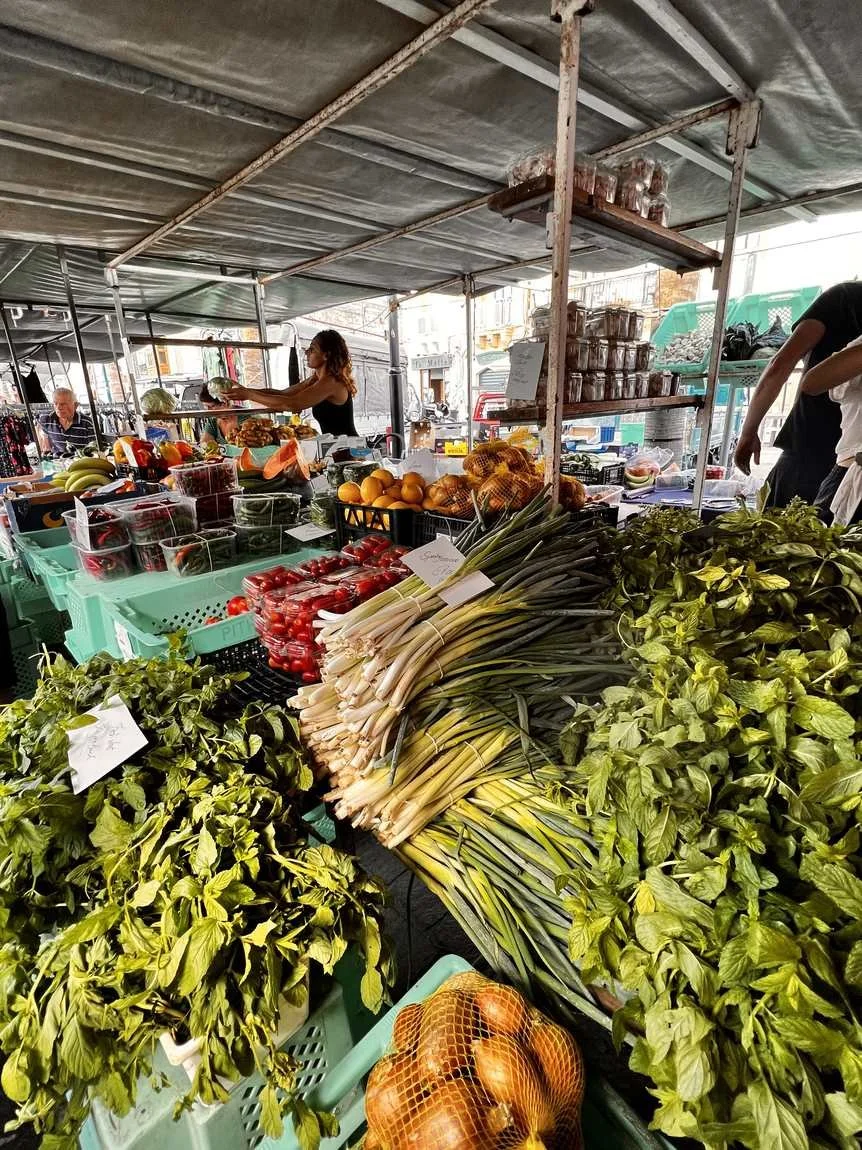
A good market, where you can actually ask.
Is organic worth it across the board?
Not equally, and here the evidence genuinely helps. Pesticide residue is highest on soft, thin-skinned produce you eat whole, leafy greens, strawberries, grapes, and lowest on thick-skinned things you peel, like avocado, banana, pineapple and onion, because the peel keeps the residue out. So if you are choosing where organic matters most, spend it on the leaves and the berries, and worry less about the ones you peel. One honest caveat: the clearest data on this comes from the US, UK produce differs, and there is real debate about whether those residue levels are harmful at all. Treat it as a sensible guide, not a rule. And two things it does not cover. Some of these, avocado, banana, pineapple, are imported whatever you buy, but the skin still keeps the residue out. And the guide is only about residue, not GM. GM is a separate promise, and organic bans it outright, which matters most for crops like corn and soy, so organic sweetcorn is both low residue and non-GM.
A quick guide to where it counts:
| Worth buying organic (thin skin, eaten whole) | Less critical (thick skin or peeled) |
|---|---|
| Spinach, kale and leafy greens | Avocado |
| Strawberries, grapes and berries | Banana |
| Nectarines, peaches, cherries | Pineapple and mango |
| Potatoes (often treated after harvest) | Onions |
| Green beans | Melon |
The bigger point is the one from the labels piece: organic is one signal, and a farm can be as good or better without the certificate. I recently found a farm near me rearing slow-grown chickens to around a hundred days, working with nature rather than against it, described as beyond organic. No stamp, but ask them anything and they will tell you exactly what they do. That willingness to answer is worth more than a logo.
Isn't buying this way more expensive?
Less often than people assume, and sometimes it works out cheaper. I buy our vegetables from a local farm that grows its own and fills the gaps through an organic wholesaler, and I come home with more variety and better flavour than the supermarket, often for less. With meat I like to buy across the whole animal rather than only the famous cuts, and the less familiar ones, cooked properly, can be some of the best things you will eat. A rib of beef I keep for a special occasion, or when there is a crowd to feed, because it is a proper cut for that. And I use everything, a chicken carcass becomes stock, so very little is wasted.
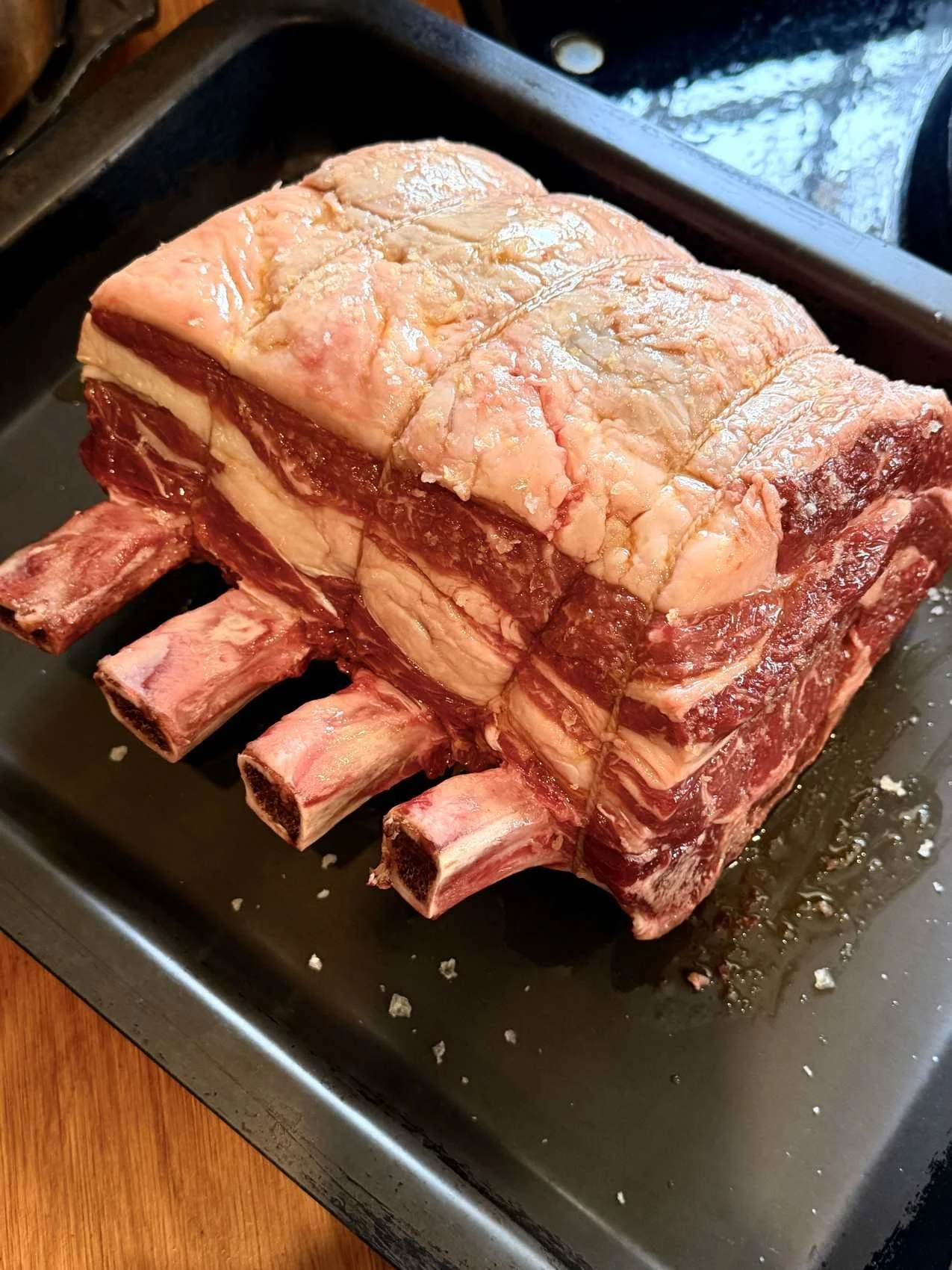
A rib of beef, kept for an occasion.
I try not to measure it by this month's budget alone. The quality and the flavour are the real point, and underneath that I see eating well as an investment in our health, for me, for Rob and for Neve. What we put into good food now is money I would rather spend than pay later in feeling unwell, or in medication I would rather never need. I do believe, in a real way, that we are what we eat. Good food does not have to cost the earth, and where it does cost a little more, this is exactly where I want the money to go.
None of this happened overnight, and it does take time and a bit of organising, meal planning, buying online, buying in bulk when there is an offer. Convenience is the supermarket's whole pitch, and I understand why it wins. But once you have found your people, the farm, the butcher, the grower, it gets easier, and the food is simply better. Where in your weekly shop are you trusting a shop's reputation instead of asking it a question?
Related reading: What UK food labels actually guarantee, and where they mislead you
Extra virgin olive oil: how to buy one that is actually good
Sources
EWG 2026 Dirty Dozen and Clean Fifteen (pesticide residue by produce): https://www.ewg.org/foodnews/
Soil Association, what organic bans: https://www.soilassociation.org/what-we-do/championing-organic/what-isorganic-food/
Pasture for Life (100 percent pasture certification): https://www.pastureforlife.org